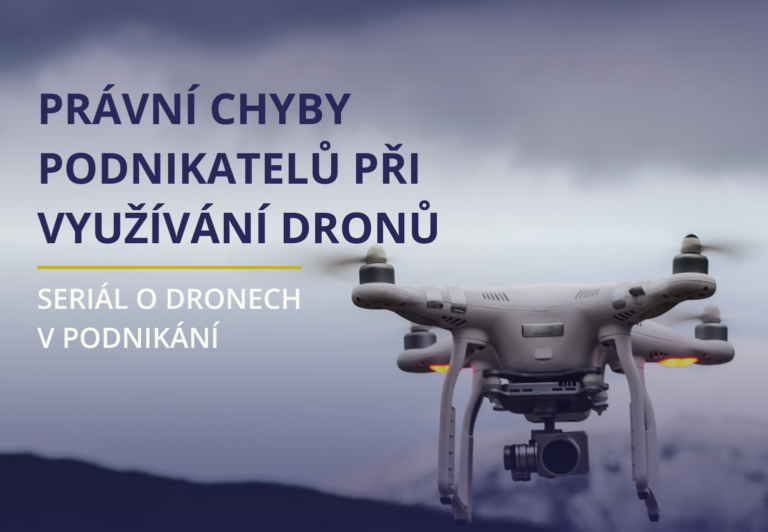
The use of unmanned aerial vehicles (UAS) is constantly expanding. We encounter them in marketing, real estate, construction inspections and agriculture. However, the availability of the technology gives many entrepreneurs the impression that simply purchasing a drone is enough to operate it. However, reality is tied European regulations, national legislation and privacy protection rules. Where do companies make mistakes and what do clients most often contact us about?
The most common legal mistakes made by entrepreneurs
1. Failure to respect airspace restrictions
Business people (e.g. during construction inspections, terrain mapping or advertising filming) often need to operate in city centers, controlled airspace (CTR) or over industrial areas. Flying without prior zone control in the official system DroneMap However, it is not worth it and the Customs Administration punishes violations of the rules with anything from warnings to very high financial fines.
2. Commercial use of footage vs. GDPR
Drone filming and photographing people is subject to strict GDPR and national data protection laws. Unauthorized capture of people can be an invasion of their privacy, which can result in penalties and legal action. Pilots should therefore always consider the legality of filming in advance and avoid recording and subsequently publishing identifiable people without their explicit consent.
3. Responsibility for external suppliers
A common mistake is hiring an external pilot without verifying that he or she has the appropriate license. In the event of an accident or violation of regulations, the obligation to compensate for damages or pay a fine may also be transferred to the client.
4. Incorrect traffic category
Although an Open category license is sufficient for most corporate operations, some operations require a Specific category license - for example, when flying beyond the pilot's direct line of sight (BVLOS), in riskier cities, near airports, or when transporting cargo.
What problems do clients contact us with?
If errors or disputes occur, law firms most often deal with the following issues:
Administrative proceedings with the Civil Aviation Authority (CAA)
Administrative proceedings can arise for various reasons, the following situations are typical:
- licensing and permitting procedures, which serve, for example, to obtain an air operator certificate (AOC), approval of a maintenance or training organization, or issuance of a pilot license. These procedures tend to be administratively demanding and require the preparation of extensive documentation;
- sanction proceedings, which the CAA initiates when there is a suspicion of a violation of regulations, failure to comply with safety standards, failure to meet aircraft maintenance requirements, or violation of airport operating rules. The result may be a fine or corrective measures;
- removal or restriction of permissions – the most serious scenario, when the authority moves to restrict authorization, revoke the license or suspend operations. Such a decision often has major economic and professional impacts.
We help clients with preparation for proceedings (e.g. preparing applications for licenses, communicating with the office, or setting up internal processes), with representation during proceedings, and with proceedings against the office's decision.
Disputes with insurance companies after a drone crash
If there is damage to property or health, insurance companies closely examine whether the operator complied with all aviation regulations. If the pilot flew higher than allowed or did not have the appropriate authorization for the area, the insurance company may reduce or completely refuse insurance coverage.
Underestimating contractual documentation and vague agreements
In practice, disputes often arise because companies execute contracts based on simple emails, orders without detailed conditions, or poorly adapted contract templates. Contracts for work often lack key provisions – such as liability for damage or the possibility of withdrawal from the contract, which can lead to protracted legal disputes.
záver
The use of drones offers entrepreneurs new opportunities and more efficient work, but the legal framework for their operation is quite complex. Avoid unnecessary risks and keep legislation and contracts under control - contact us, we will be happy to help you!
Want to avoid the most common mistakes when using drones in business? We'll help you stay one step ahead of the competition!

JUDr. Ing. Jan Vych, attorney and partner